
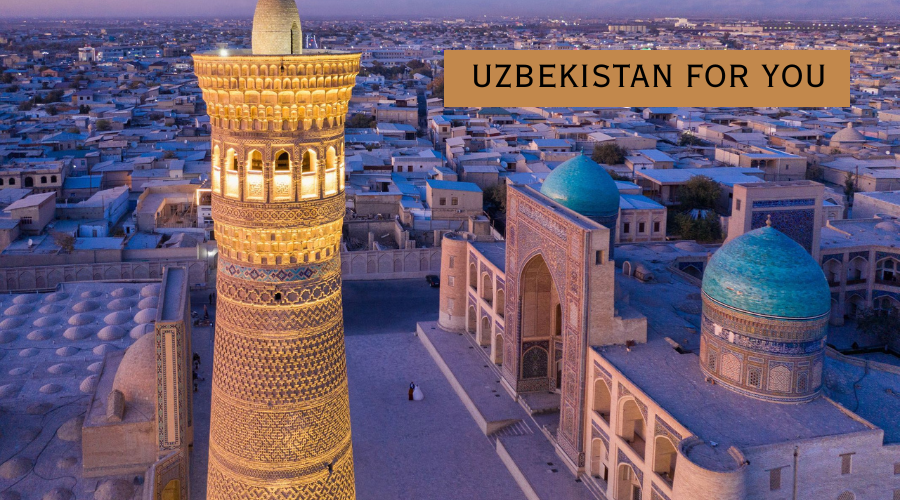
Without a doubt, the Pearl of Central Asia is Uzbekistan. It is now easier than ever to travel to more than 90 countries without a visa. Major cities like Tashkent, Samarkand, and Bukhara are connected in a matter of hours by the fast Afrosiyob train. Ahead of 2025, anticipate additional infrastructure improvements, particularly in the vicinity of Silk Road locations. Even in smaller places, card payments are now often accepted, and local SIM cards are inexpensive and simple to obtain.
Weather: The Foremost thing in the Uzbekistan Travel Itinerary
The dry continental climate of Uzbekistan is marked by scorching summers, frigid winters, and little precipitation. Winters (December to February) can dip below freezing, especially in the north, but summers (June to August) can reach 40°C, especially in towns like Bukhara or Termez.
The best seasons to go are spring (April–May) and fall (September–October), when it’s temperate, sunny, and comparatively dust-free. Rainfall is infrequent and usually occurs in the early spring. Expect significant day-to-night temperature variations, particularly in arid or mountainous regions.
Uzbekistan Travel Guide For You:
1. Samarkand
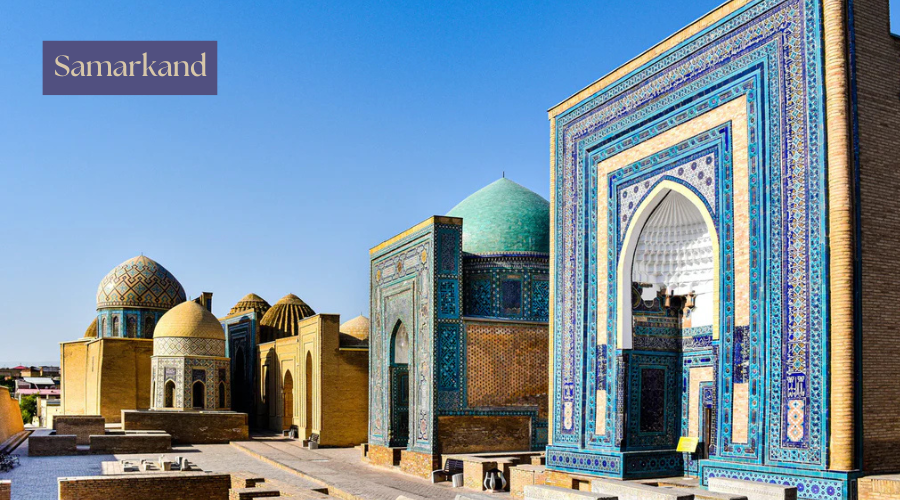
During the Silk Road era, Uzbekistan flourished due to its advantageous location between China and Europe, drawing traders, authors, craftspeople, and even Genghis Khan.
Samarkand is a blend of polished landmarks and daily life, offering more than just monuments. The city’s greatest attraction, the Registan, is home to three opulent madrassas: Tilya-Kori, Sher-Dor, and Ulugbek. Their courtyards, which were once Islamic schools, are now used to market trinkets. Although the area is well-maintained and refurbished, it occasionally feels staged.
Samarkand reveals its true nature beyond the major attractions. A more realistic perspective is provided by residential streets with chipped pavement, stands offering dry fruit, and residents going about their daily lives. Large and partially supported, the Bibi Khanum Mosque is mostly silent, with a few individuals praying or taking a nap in the shade.
Shah-i-Zinda is exceptional. The worn tilework and more pronounced spiritual presence give this hillside necropolis a lived-in atmosphere. People come here to pray, not to pose, so it feels less touristic the farther you go. Samarkand’s atmosphere is found in its little moments and side streets, even though Registan may be the main attraction on the brochures.
2. Tashkent
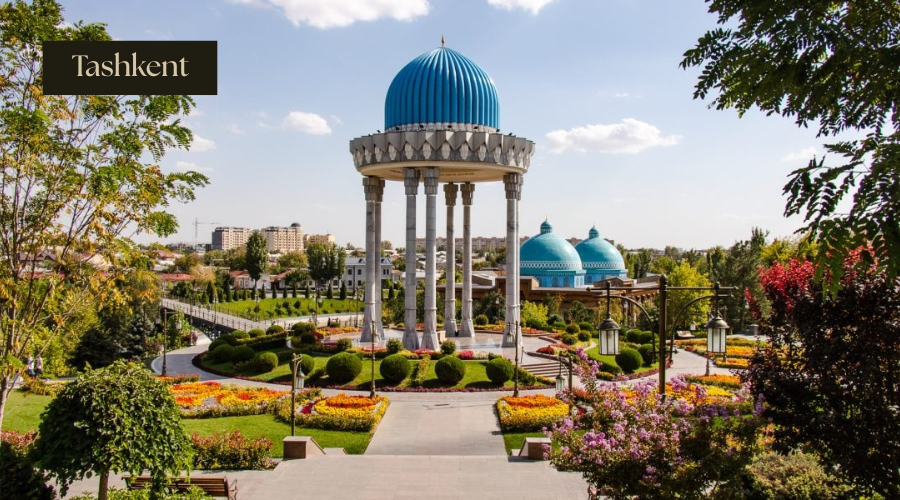
People don’t expect Tashkent. It doesn’t have a lot of historic structures or charm. Large and dispersed, it’s a thriving city with apartment buildings from the Soviet era, tidy parks, busy crossings, and a metro system that’s surprisingly effective and cool in the summer.
Chorsu Bazaar is likely to be on your itinerary. Locals purchase bread by the stack, spices by the weight, and rice in bags. It smells like fire, dill, and raw meat. Here, you’ll see more locals than visitors. Adjacent to it is the Kukeldash Madrasah, which is not particularly busy. Everything is always being constructed, fixed, or painted. The sidewalks are frequently deserted, and the streets are spacious.
The Tashkent TV Tower is tall, but unless you enjoy architecture, it isn’t very interesting. Walking is enjoyable in the parks, and during the summer, the fountains are typically operational. We don’t have a core “old town.” Instead, you find distinct communities, some of which are expensive, some of which are in decline, and some of which are somewhere in between.
3. Bukhara
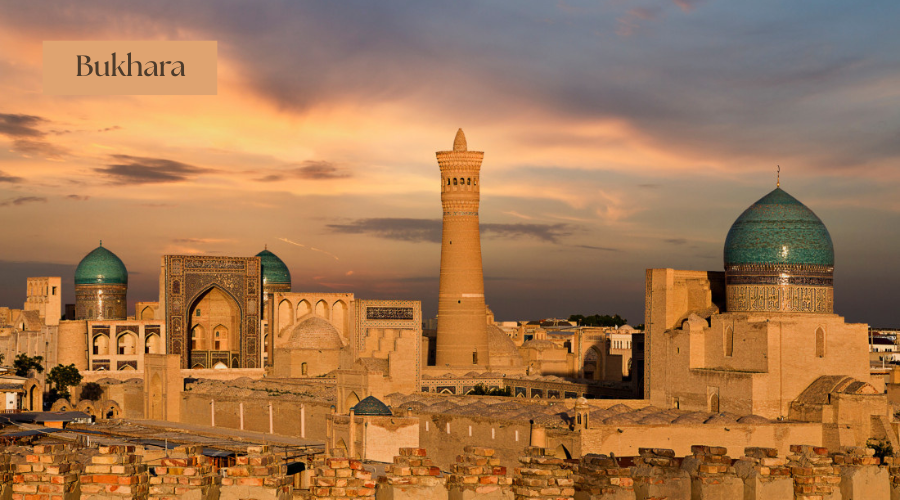
Time seems to move more slowly in Bukhara than in other cities. There isn’t much of a rush here, and people walk at varying speeds. Most of the city’s ancient area is level, walkable, and simple to get around without any planning.
It’s difficult to overlook the Kalon Minaret. It is isolated, a little away from the madrasah and mosque that are close by. Even with tourists, the nearby Kalon Mosque is typically peaceful inside. You can hear your own footsteps as soon as you enter the main courtyard.
Although the ancient stronghold known as the Ark appears spectacular from a distance, it is only partially restored and lacks a sense of life. Nevertheless, the size and sense of how cities were formerly guarded make it worthwhile to see. There are typically a few vendors selling trinkets outside the Ark. Instead of the typical keychains, some of them offer dusty books and old Soviet currency.
Across the street is the Bolo Hauz Mosque. Despite its small size, it is worth seeing because of the outside carved wooden columns. Enter if it’s open; the prayer hall is quiet and unassuming.
4. Khiva
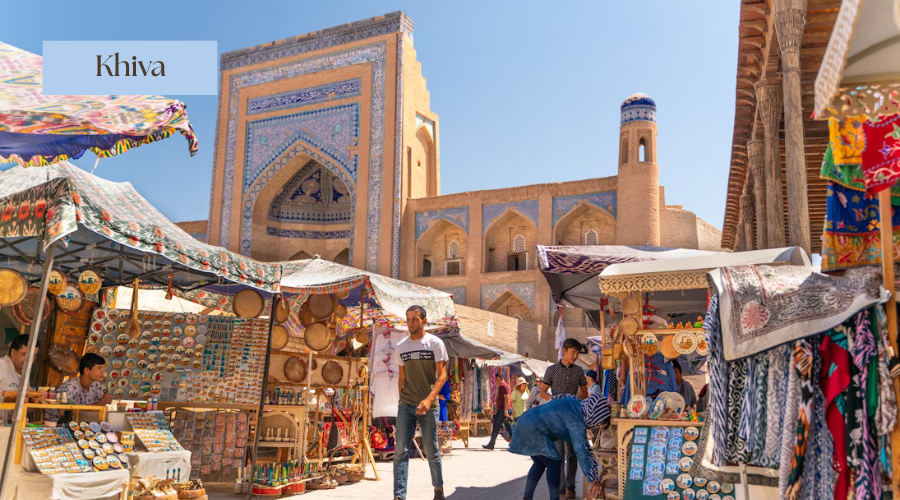
Khiva is small. It takes less than fifteen minutes to walk from one end of Itchan Kala, the old city, to the other. The city walls are in good condition and undamaged. It feels self-contained once you enter. A location with a rhythm all its own.
The majority of the historic structures, including the Djuma Mosque with its wooden columns, the Tosh-Hovli Palace, and the Kalta Minor minaret, are located inside the walls. They are all near one another. There isn’t much greenery, so the light, especially during midday, seems washed out as it bounces off the pale mudbrick walls.
Mornings in Khiva are calm. Except a few businesses and cats, the streets are largely deserted in the early hours of the day before the tour groups arrive. There are nooks and crannies where you can find everyday activity, such as children playing with sticks or a woman repeatedly sweeping dust into the same area. Other areas feel like a movie set—too neat, too kept.
5. Fergana
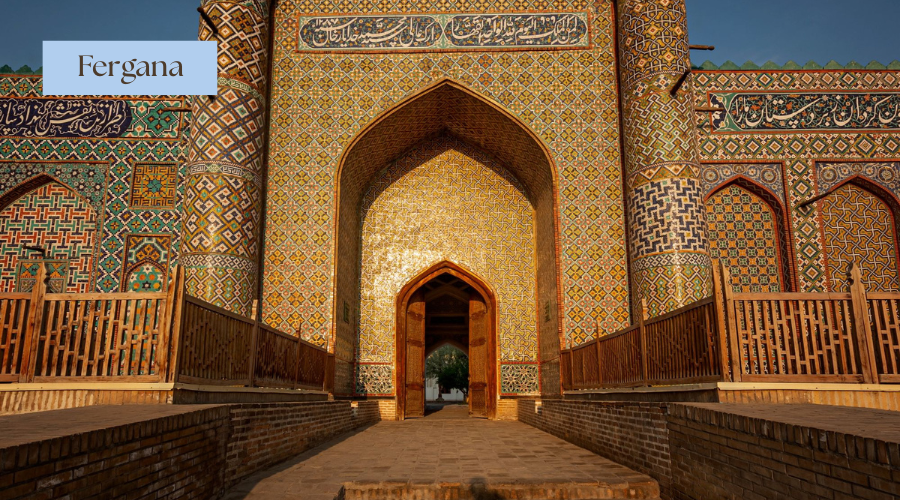
Fergana is calm and flat. Not fast-paced, but certainly not rural. Dusty trees, wide streets, and the impression that most people are merely going about their daily lives. There are more families, uniformed schoolchildren, and individuals walking rather than hurrying. The most lively area is the markets, which are noisy but in a serious, non-dramatic manner.
Although there aren’t many monuments or buildings here, the city has a sense of life. The intriguing thing about Fergana is not the city itself, but the connections it offers to other locations, such as Margilan for silk, Rishtan for ceramics, and Andijan for its unique blend of the ancient and the modern.
6. Termez
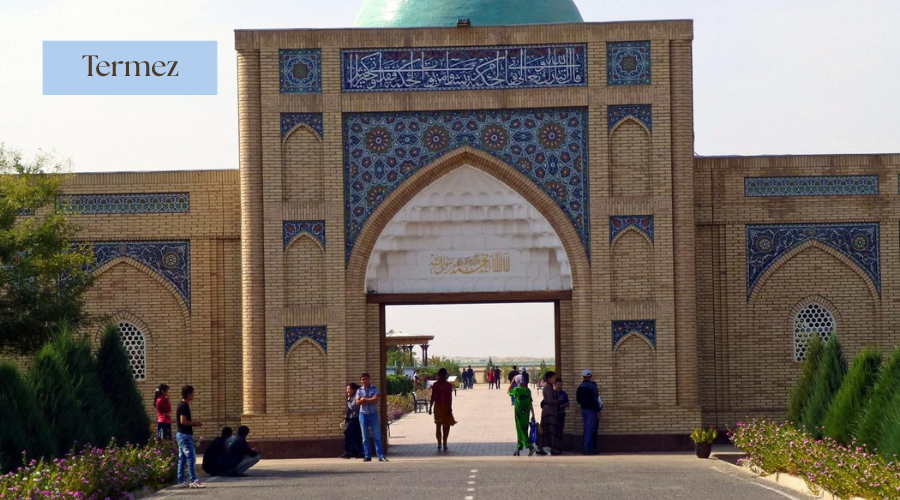
Geographically, historically, and atmospherically, Termez is on the brink. The only things separating it from the Afghan border are the river and an invisible but palpable military presence. The city is dispersed and peaceful.
On the periphery are modest Buddhist ruins. The majority are walls, foundations, and pieces. An hour spent at the archeological museum is worthwhile, particularly if you’re looking for background. It’s more about traces and shards than it is about polished exhibitions. There aren’t many foreign visitors. This place exudes a sense of silence that comes from being far from the center of things, rather than being drowsy.
7. Moynaq
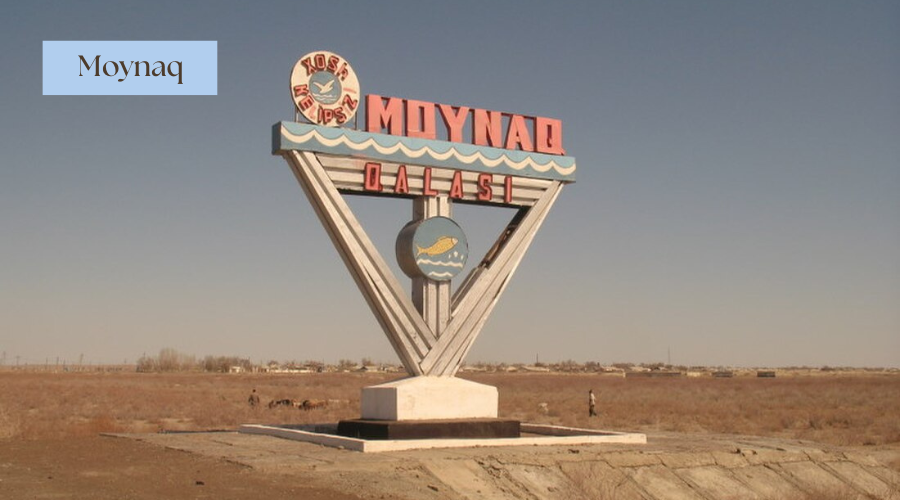
It is difficult to characterize Moynaq’s peaceful nature. For the Aral Sea—or what’s left of it—come here. It’s a tiny ship cemetery. There are few rusty boats in the sand. Nearby, a museum displays old photographs and maps that indicate the location of the water. Locals talk to each other directly.
The landscape eventually becomes uniform in all directions along the lengthy and level road leading to Moynaq.
Things to do in Uzbekistan
- Enjoy a cup of local herbal blend at a chayhanna, which is a teahouse and a typical spot to do so. Teahouses are great places to relax because many of them include outdoor seats.
- Eat plov in a plov-only establishment. Leave before noon. Find out from someone where the locals eat, not the upscale establishments. The spoons may be made of plastic or metal, and the floor may be damp.
- For instance, observe elderly men in a Tashkent park playing chess. They don’t raise their eyes. This is what they have been doing for decades. Sometimes there is only one opponent and a small crowd.
- Enter an Uzbek bakery at random in the morning.
Uzbekistan Transportation
It is neither tough nor easy to navigate Uzbekistan.
Trains
Tashkent, Samarkand, Bukhara, and (less commonly) Khiva are all connected by the fast Afrosiyob.
It is arguably the most effective component of Uzbek infrastructure; it is up to date, tidy, and punctual. Each seat has a number. Get to stations early because security is stringent. Additionally, the slower Sharq or night trains continue to operate.
They make more stops, are older, and are less expensive. Strangers handing you tomatoes or half a cucumber, the tea carts, and the repetitive commotion are all strangely soothing if you’re not in a hurry.
Uzbekistan Railways
Traveling by train is a practical method to see the nation. One of the companies you can reserve a train ticket with is Uzbekistan Railways. Depending on availability, Uzbekistan Railways provides soft or hard seats for shorter routes and first- and second-class sleeper accommodations for longer journeys.
The route and duration of the trip determine the ticket selections; second-class seats are appropriate for overnight travel, whereas soft seats are best for trips lasting less than four to five hours.
Train travel can save you a night in a hotel, is inexpensive, avoids traffic, and has convenient stops in the heart of the city.
Food in Uzbekistan
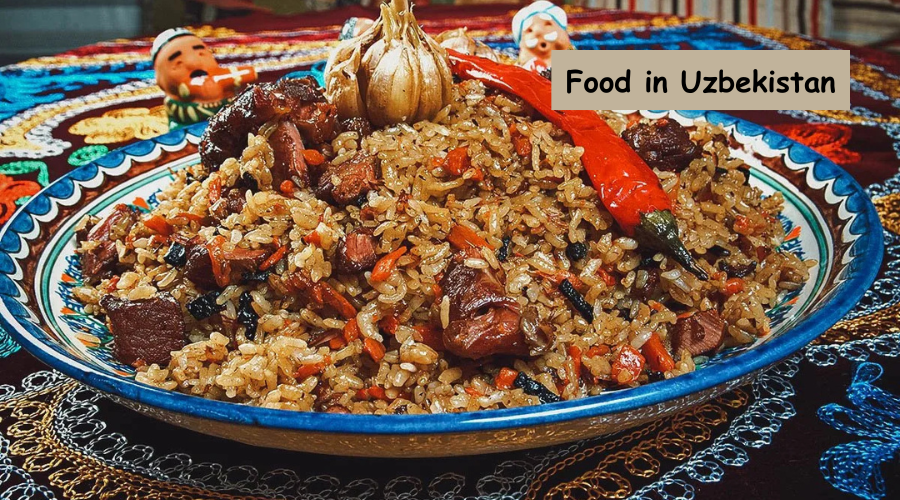
The hearty, meat-and-rice-heavy Uzbek cuisine is designed to keep people fed and engaged for extended periods of time. Plov is found all over the place; depending on the city, it might be oily or flawless.
Bread is handled with a sort of hallowed familiarity as it comes out of clay ovens; it is not cut with a knife or placed upside down.
Even in hot weather, tea is typically served before meals, and side dishes are frequently either raw, pickled, or both. Simple, monotonous, and strangely soothing, you can get somsa (meat- or pumpkin-stuffed pastries), shashlik (grilled skewers), and lagman (hand-pulled noodle soup) practically everywhere.
BONUS
- Most travelers can enter Uzbekistan visa-free for up to 30 days, especially those from the EU, UK, and Japan. Others-including citizens of the U.S., India, and China-can apply for a 30-day e-visa online, usually processed in 1-3 days.
- The e-visa costs around $20-$50, depending on the number of entries, and requires a valid passport, photo, and a Visa card for payment.
- Technical issues (photo uploads, failed payments) are common, so applying early is smart. All travelers must register within 72 hours of arrival—hotels usually handle this automatically.
You can always plan your travel stress-free with 12go. Your best friend during adventures. Click to explore and make memories with no hassle.
FAQ
1. Is English spoken by anyone?
Ans: Russian is far more frequent in large cities, while some younger people and hotel employees speak basic English. Outside of tourist attractions, be patient and expect hand gestures.
2. Is traveling in Uzbekistan safe?
Ans: Indeed. Locals are generally courteous, and there is little street crime. There is a lot of police, sometimes too many, but most tourists don’t mind.
3. Is it safe to drink Uzbek tap water?
Ans: No. In Tashkent as well, only drink bottled water.
4. What am I supposed to wear?
Ans: Although modest attire is customary, Uzbekistan is not rigid. Tank tops and headscarves are both common in Tashkent or Fergana. It’s best to keep things covered in rural areas.
5. Items to avoid bringing into Uzbekistan?
Ans: Anything that can be interpreted as weakening the state is forbidden to enter Uzbekistan. This includes content that encourages bigotry, terrorism, violence, or hostility against certain religions.