
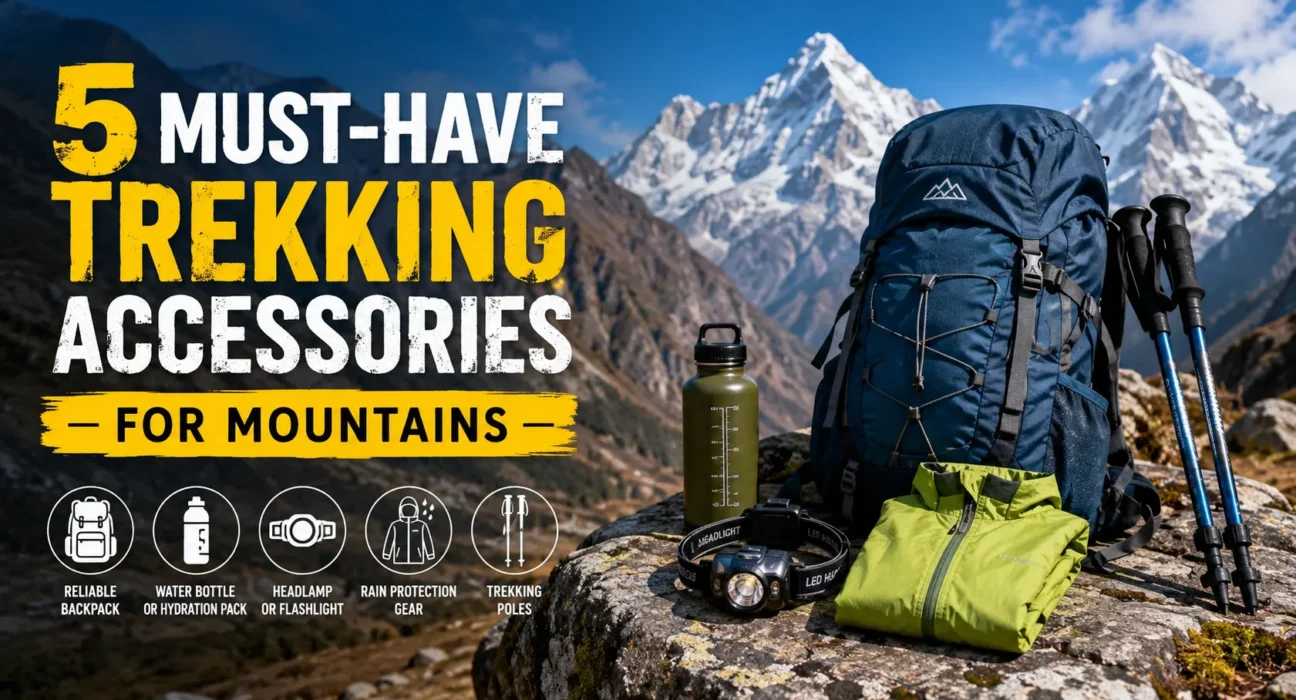
Have you ever started a mountain trek and realized halfway through that you forgot something important? It could be as simple as a water bottle, a flashlight, or even a rain cover.
When you’re trekking in the mountains, the weather can change quickly, the trails can become challenging, and small mistakes can turn into big problems. That’s why carrying these must-have trekking accessories for mountains is just as important as wearing good trekking shoes.
List Of 5 Must-Have Trekking Accessories For Mountains
Many people focus only on fitness and route planning before a trek, but experienced trekkers know that the right gear can make the journey safer, more comfortable, and more enjoyable. Whether you’re planning a short weekend hike or a multi-day mountain adventure, a few essential accessories can make all the difference. Here are five must-have trekking accessories that every mountain trekker should carry.
1. A Reliable Backpack
A trekking backpack is the first and most important accessory you need. It carries everything you’ll need during your journey, from water and food to extra clothing and emergency supplies. The ideal backpack should be lightweight, comfortable, and spacious enough to hold your essentials without feeling bulky. Look for one with padded shoulder straps and a waist belt, as these help distribute weight evenly across your body.
For day treks, a backpack between 20 and 30 liters is usually enough. For longer treks, you may need a larger pack with additional storage compartments. A good backpack not only keeps your belongings organized but also reduces strain on your shoulders and back during long walks.
2. Reusable Water Bottle or Hydration Pack
Staying hydrated is one of the most important parts of trekking. Mountain trails often involve steep climbs and long hours of walking, which can quickly drain your energy if you’re not drinking enough water. A reusable water bottle is a simple but essential accessory. Many trekkers also prefer hydration packs because they allow them to sip water without stopping or taking off their backpacks.
Dehydration can lead to headaches, dizziness, and fatigue, making trekking difficult and unsafe. Always carry enough water for your route and refill whenever you find a safe water source. Remember, when you’re in the mountains, water is not just about comfort, it’s about safety.
3. Headlamp or Flashlight
Many trekkers underestimate the importance of carrying a light source. Even if you plan to finish your trek before sunset, delays can occur due to weather changes, difficult terrain, or unexpected stops. A headlamp is often a better choice than a handheld flashlight because it keeps both hands free while walking. This is especially useful when navigating rocky paths or setting up camp in low-light conditions.
Choose a headlamp with adjustable brightness settings and carry extra batteries if you’re going on a long trek. Having a reliable light source can help you avoid accidents and find your way safely if darkness arrives sooner than expected.
4. Rain Protection Gear
Mountain weather is famous for being unpredictable. A bright sunny morning can suddenly turn into a rainy afternoon. That’s why rain protection should always be part of your trekking kit. A lightweight rain jacket is one of the best investments a trekker can make. It protects you from rain, wind, and cold temperatures while remaining easy to carry.
It’s also a good idea to carry a backpack rain cover. Keeping your clothes, electronics, and food dry can save you from a lot of discomfort during your trek. Even if the weather forecast looks clear, packing rain protection is a smart decision. In the mountains, it’s always better to be prepared than surprised.
5. Trekking Poles
At first glance, trekking poles may seem unnecessary, especially for beginners. However, once you use them on a steep mountain trail, you’ll understand why so many experienced trekkers never leave home without them. Trekking poles provide extra balance and stability, especially when crossing uneven terrain, rocky sections, or slippery paths. They also reduce pressure on your knees and joints during steep descents.
Long treks can be physically demanding, and trekking poles help distribute effort across your entire body rather than putting all the strain on your legs. They are particularly useful for older trekkers, beginners, and anyone carrying a heavier backpack.
Final Thoughts
Mountain trekking is one of the most rewarding outdoor experiences. The fresh air, breathtaking views, and sense of achievement make every step worthwhile. However, the mountains can also be unpredictable, which is why preparation is so important. While there are many trekking gadgets available today, you don’t need to carry everything. A reliable backpack, enough water, a dependable light source, rain protection, and trekking poles are five accessories that can help you tackle mountain trails with confidence. The next time you pack for a trek, make sure these items are on your checklist. They may seem simple, but they can have a huge impact on your overall trekking experience.
For more e-commerce details, make sure to visit this website.
FAQ
1. What is the most important accessory for mountain trekking?
A. A reliable backpack is often considered the most important trekking accessory because it carries all your essential gear, including water, food, clothing, and safety equipment. Choosing a comfortable, well-fitting backpack can make your trek much easier and more enjoyable.
2. Are trekking poles necessary for beginners?
A. While trekking poles are not mandatory, they are highly recommended for beginners. They provide better balance, reduce pressure on the knees, and offer extra support on steep or uneven trails, making trekking safer and less tiring.
3. How much water should I carry during a mountain trek?
A. The amount of water depends on the length and difficulty of the trek, but most trekkers should carry at least 2–3 liters of water for a day hike. It’s important to stay hydrated throughout the journey and refill whenever safe water sources are available.